

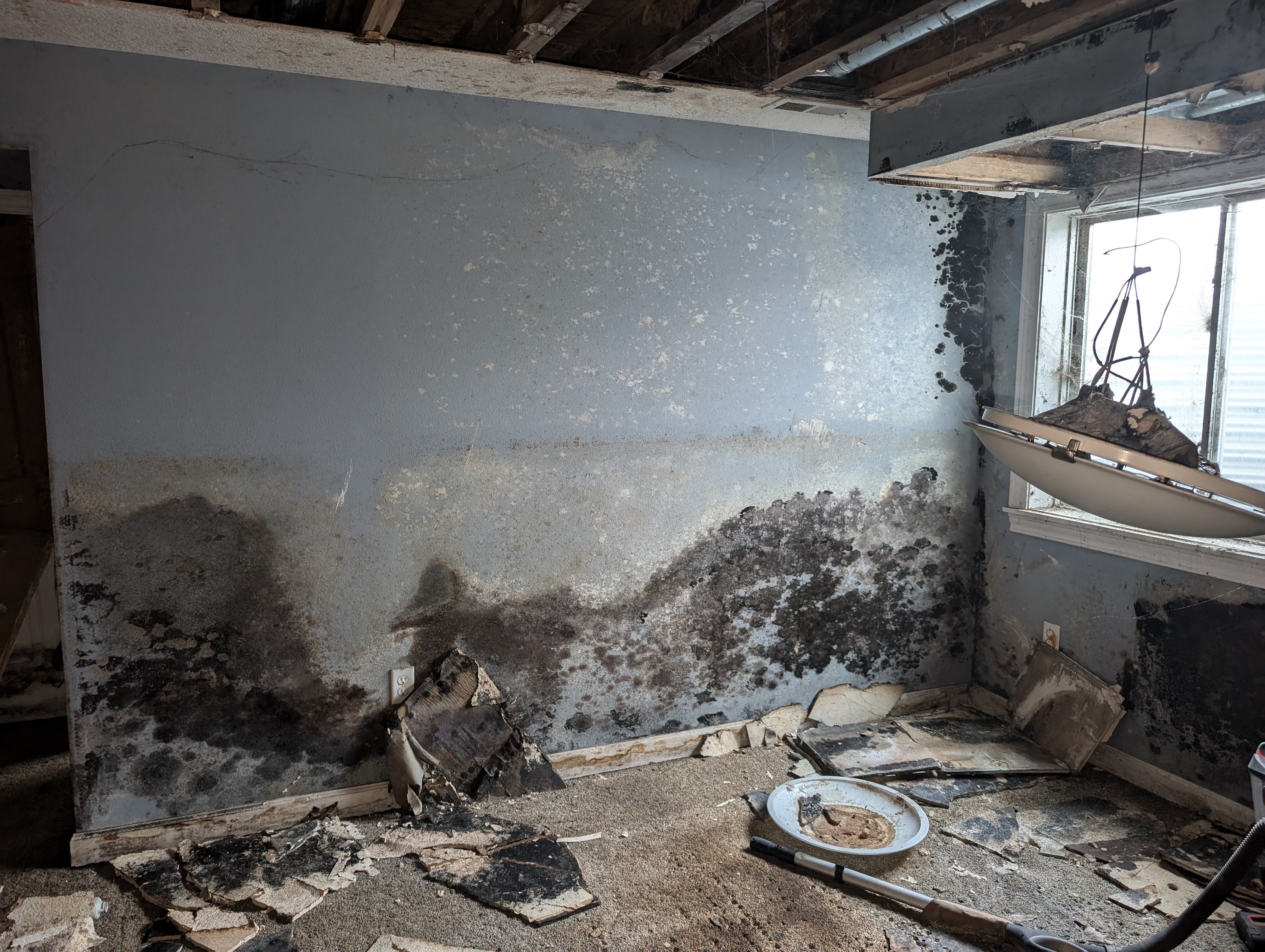
Imagine you’re a homeowner getting ready to sell, and as you’re cleaning up the basement, you find a fuzzy, slimy patch of mold by a leaky pipe. Your first response might be frustration, and maybe even a bit of panic. While a severe infestation can throw a wrench into any sale, patches of mold are like opinions; everyone has them.
If the bread and cheese in your fridge can have it, you shouldn’t be surprised that mold is virtually everywhere. Most homes will have some degree of growth from mold and mildew, and in many cases removing it is a one-and-done project you can handle yourself.
But more serious mold infestations need to be resolved properly. To help you understand the process, we’ll share key information and walk you through how SoldFast handled a mold infestation at one of our recent projects. You’ll learn how to recognize a mold problem, what your options for professional solutions are, and how to satisfy disclosures or other legal aspects related to mold remediation.
Types of Mold and 4 Signs It’s In the House
There are thousands of mold species, and many are difficult to distinguish from one another without specialized equipment. Instead, molds are more broadly categorized as pathogenic, allergenic, and toxigenic.
Pathogenic molds can grow in inside the human body and make you sick, most often causing respiratory problems like coughing and sinus irritation.
Allergenic molds produce an allergic reaction like sneezing or skin rashes, and can still affect people not fully allergic to those types of mold.
Toxigenic is considered the most dangerous type, due to these molds’ dispersal of harmful chemicals called mycotoxins. Aspergillus species are commonly toxigenic.
Some people also use color-based terms like black or green, as many darker molds are more dangerous, but ultimately you can’t identify a mold species through color alone. Along with black and green, molds can also be white, yellow, brown, and even shades of red and pink. But even if you see it right away, visible mold isn’t necessarily a problem as long as it’s dry and crumbly. This mold is dead and won’t spread, so you can scrub it off with the right cleaning supplies and a brush. Any that’s moist and shiny, however, means the mold is actively growing.
Because mold likes dark, moist environments, you may not notice the mold at first. It may be behind walls, under floors, and in unfinished spaces like the attic or crawlspace. Instead, look for signs like:
- Musty smells
- Allergic reactions
- Visible water damage like stains, warping or bubbles
- Recent leaks from the roof or plumbing
That should be enough to help you determine whether you should start looking for mold. If you suspect there’s mold somewhere in the house, it can be a good idea to use the CDC Full assessment tool to fully document the location and extent of the infestation.
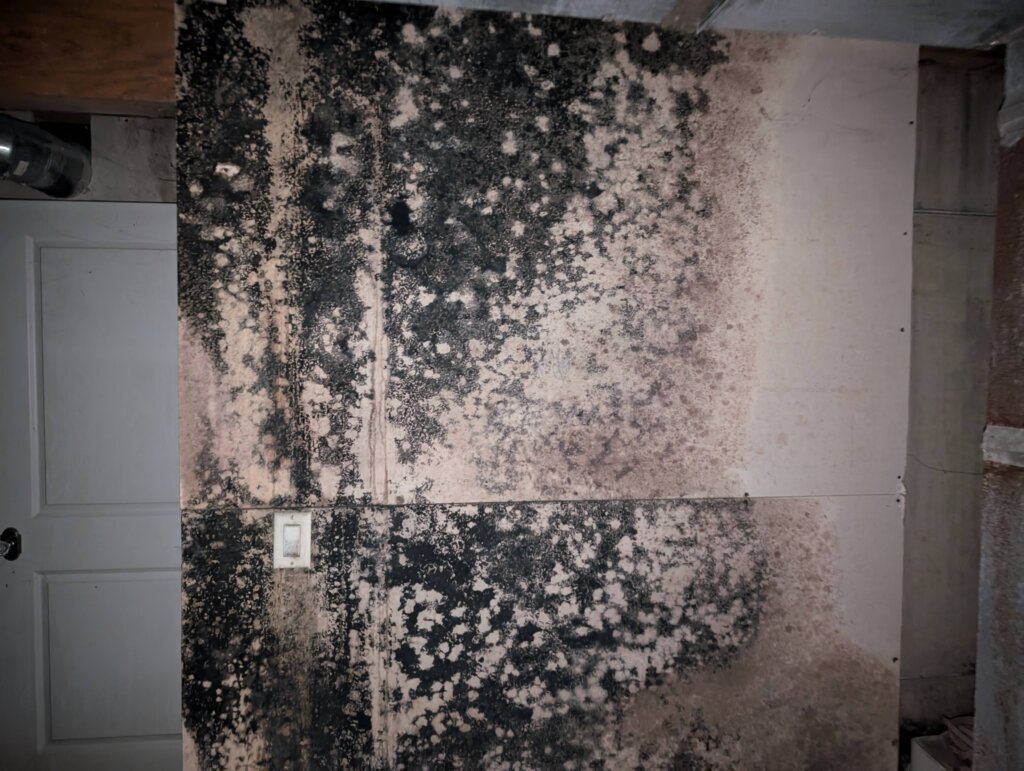
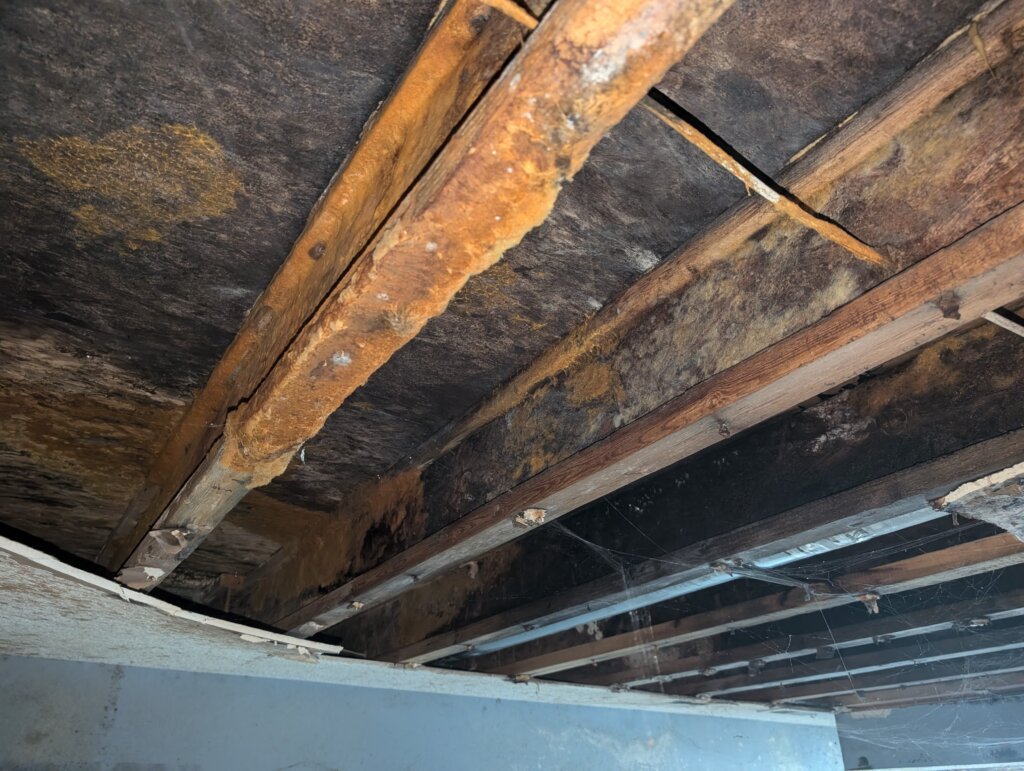
The mold problem at this single family townhome property in Ankeny, IA, was the most widespread in the basement, one of the most common places for mold to show up. After SoldFast purchased the property and did a walkthrough, mold was found on:
- Walls
- Floor joists & support beams
- Carpet adhesive
- The ceiling
The Difference Between Mold and Mildew
Wait, shouldn’t you be looking for mildew too? You might not know that both substances are fungi, and in fact mildew is just mold growth in its earliest stages. Mildew can’t infiltrate the surface of porous materials the way mold does, which is why true mold can cause structural damage over time. If you see mold growth on a nonporous surface like metal, it’s just mildew.
Why Removal Is Important: 4 Health Problems a Mold Infestation can Cause
The more dangerous species of pathogenic and toxigenic molds can cause serious health concerns. In fact, even some allergenic types produce moderately-harmful symptoms, although usually for people who are most sensitive to them. Some of both common and more severe health problems from mold exposure include:
- Coughing, sneezing, and runny noses
- Skin redness and rashes
- Severe infection
- Autoimmune disorders (with prolonged exposure)
Mold spores are invisible to the naked eye, and can easily reach hazardous levels even when the mold isn’t readily visible. When the infestation is this serious, improving ventilation and using PPE like respirators and gloves should always be used to minimize the risk of exposure.
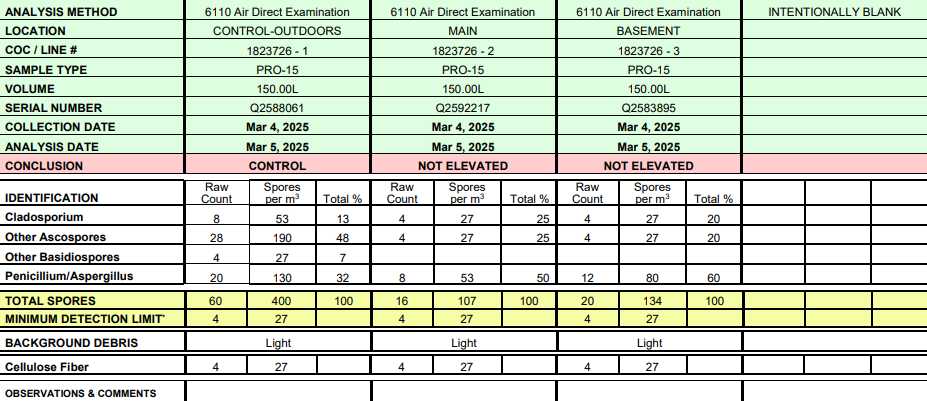
At our Ankeny property, we found several mold species capable of causing symptoms, including:
- Penicillium/Aspergillus – spores of these species are so difficult to tell apart that they are grouped together
- Cladosporium – a very common allergen that can aggravate hay fever, asthma, and pneumonitis
- Basidiospores – these spores are from mushrooms instead of mold, although both are fungi. Some of these species are particularly destructive to wood/plaster.
Do You Really Need Mold Inspections and Testing?
If you have reason to believe there’s mold in the house, you should check the spaces most likely to support its growth. This will be unfinished spaces with weaker ventilation, like the attic and basement, as well as high-traffic, high-humidity rooms like bedrooms and bathrooms.
One thing to note is that if you believe there’s mold growing in the HVAC system, do not run the system until it’s been cleaned. Otherwise, you risk spreading active mold spores throughout the entire house.
Now, it may come as a surprise to hear that the CDC doesn’t actually suggest basic testing for mold, due to a lack of consensus on what species and concentrations of them start to cause health problems. Additionally, since the same cleaning and removal techniques work for all mold types, the best course of action is removing it as soon as it’s found regardless of species.
A full inspection for mold, meanwhile, isn’t needed unless you suspect a hidden and dangerously widespread infestation, which could be the case if there’s lots of visible mold and extremely humid conditions. You should not skimp on the inspection at this point, because professionals have the equipment and experience to find mold without disturbing (and spreading) it. They should be able to explain their findings and provide a detailed report comparing the spore concentrations with conditions outdoors, like the one we received below:
Do-It-Yourself Mold Cleaning
When a patch of mold is smaller than 10 square feet, or roughly a 3-by-3 foot area, you can resolve the mold problem on your own. Different groups may recommend either a strong brush or a pump sprayer, and to use a concrobium spray. This is partly because bleach and water, the most well-known remedy, may only take care of surface growth on non-porous surfaces. In some cases, bleach can even form a coating on top of the mold and allow it to continue growing, which is also why you shouldn’t mix bleach and concrobium spray together.
The two most important elements of cleaning mold is fully removing/scrubbing the growth off the surface material and keeping the area dry to prevent re-growth. To avoid exposure as you work, use long rubber gloves, an N-95 respirator mask, and non-ventilated goggles.
If you’re getting ready to tackle one of these DIY mold projects, consider reading this EPA Guide for mold removal for homeowners/renters.
When It’s Time for Professional Mold Remediation
While DiY projects may be possible for small patches of mold, you should contact specialists for larger rooms and any whole-house jobs. Insufficient cleaning means mold spores would continue to spread, and may even develop resistance to the cleaning materials. You also want a specialist because standard contractor liability insurance doesn’t cover environmental contamination from mold and mildew, and similarly, most homeowner’s insurance policies exclude coverage for this type of contamination. With the certificate we received below, you can see that the environmental insurance (ENV) policies are included.
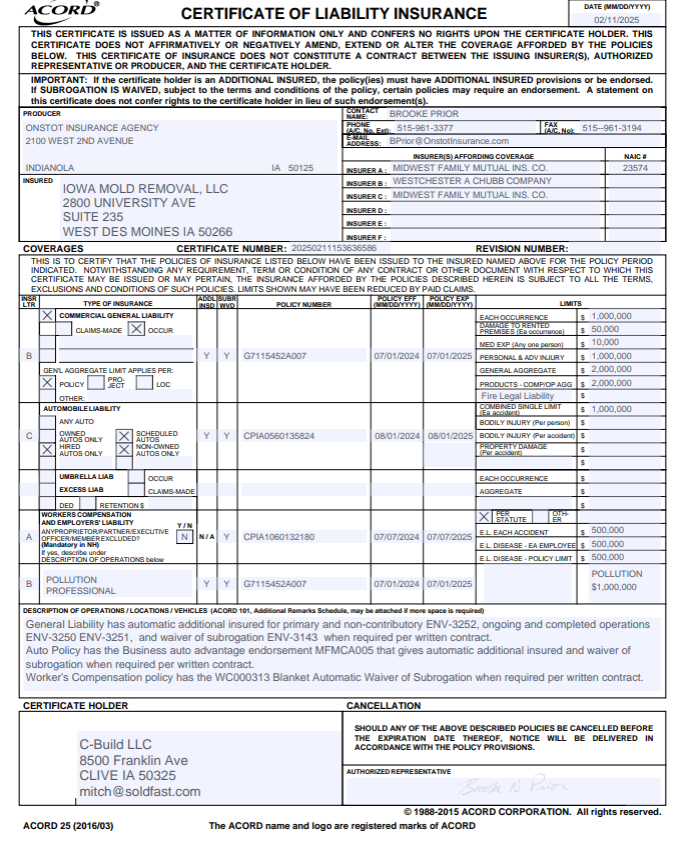
Any remediation specialist should, at minimum, have both the insurance as well as IICRC (Institute of Inspection Cleaning and Restoration Certification) credentials. These remediation companies will be able to remove the mold to such a degree that satisfies any disclosure requirements.
A general range to expect for remediation services is between $10-30 per square foot, but while we largely refer to square feet to approximate a house’s total size size, some remediation companies account for the square footage of floors, walls and ceilings separately. This is because remediation is applied to all the surfaces within a room, and not the room overall. For example, while our Ankeny property is approximately 2,754 sqft, the remediation for all surfaces amounted to roughly 10,179 sqft, as well as linear feet for along the baseboards and moulding.
Below is an approximate* estimate for remediation services based on room size, and our final cost of $12,454 to remediate 2,754 square feet falls within the projected range. Ultimately, prices will vary sharply depending on your location and the severity of the infestation.
| Square footage of spaces needing remediation | Approximate costs for mold cleaning and removal |
| 50 square feet | $500 – $1,500 |
| 100 square feet | $1,000 – $3,000 |
| 150 square feet | $1,500 – $4,500 |
| 200 square feet | $2,000 – $6,000 |
| 500 square feet | $5,000 – $15,000 |
| 1,000+ square feet | $10,000 – $30,000 |
*Based on ranges reported by Angi’s List and This Old House
Preventative Steps to Keep Mold Out
Once the mold infestation has been removed, the best way to stop it from coming back is keeping the property dry and well-ventilated. Open windows and doors initially, and considering installing fans or airflow vents in places with more stubborn circulation problems, like gable and soffit vents for the roof and attic.
Also consider the mold’s primary sources of moisture and “food”. Standing water, poor drainage, and leaky plumbing can offer more than enough moisture for favorable conditions, and the organic compounds in things like wallpaper paste and drywall/carpet glue provide the nutrients mold needs to spread. Roof/attic cases are less likely to be recurring if the roof has gable vents and soffit vents, as that should provide sufficient ventilation.
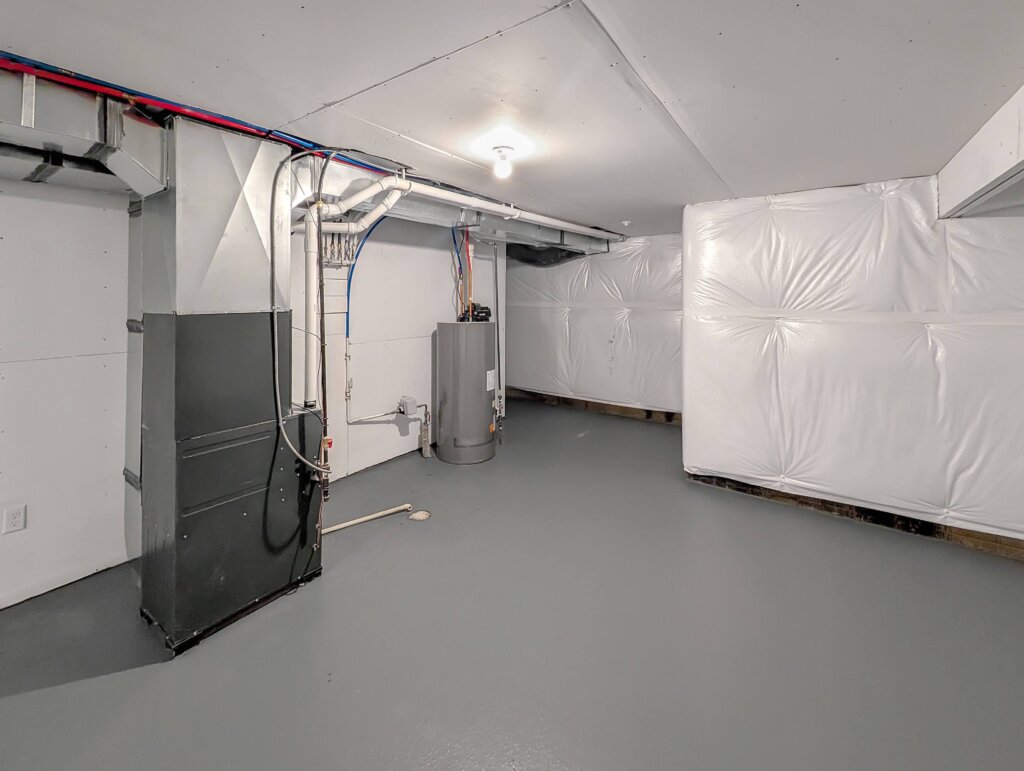
After remediation is complete, basement encapsulation is a great follow up to minimize moisture and humidity from reentering the space. With a special vapor barrier separating the basement’s interior from the foundation walls, humid conditions and any mold spores present in the air won’t be able to pass through.
Remember that this must be done after remediation, or you’ll just trap existing moisture against the foundation and increase the risk of damage. The foundation walls and supports were fully clean and dry by the time we completed the encapsulation at the Ankeny property.
Disclosing Mold Before You Sell Your Home
During the sale of your home, disclosure statements are a legal requirement that outlines certain known defects of the property that are hazardous to health or property. Failure to disclose a current or past severe mold problem can leave you with major legal problems, including heavy fines. The buyer will likely withdraw from the sale, and may even have cause to sue for fraud. The paperwork your realtor provides should include all the disclosure statements, and they can walk you through the process.
While some minor language within mold disclosures varies by state, in general you may need to disclose active mold growth, favorable growing conditions, and previous remediation efforts. In cases of past remediation, it’s also important to thoroughly document the cleaning and removal process to satisfy the disclosure clause. Proper documentation could include:
- Photos of the mold infestation prior to any cleaning
- Documentation of initial steps you took yourself to clean it (like a bleach solution)
- Reports and receipts from the mold remediation company used
- And ongoing efforts to keep the area dry, like using a dehumidifier
Disclosure may not be necessary if the mold was:
- Restricted to a small area AND
- Remediated, dried immediately AND
- If the infestation was a very long time ago (5+ years)
This is not because there are exceptions to the disclosure requirements, but because it’s extremely unlikely the mold growth would be problematic after so much time. You should always provide disclosure to guarantee full legal coverage, and especially if there was dry rot or molds in the subflooring or framing where the potential for structural damage is greatest.
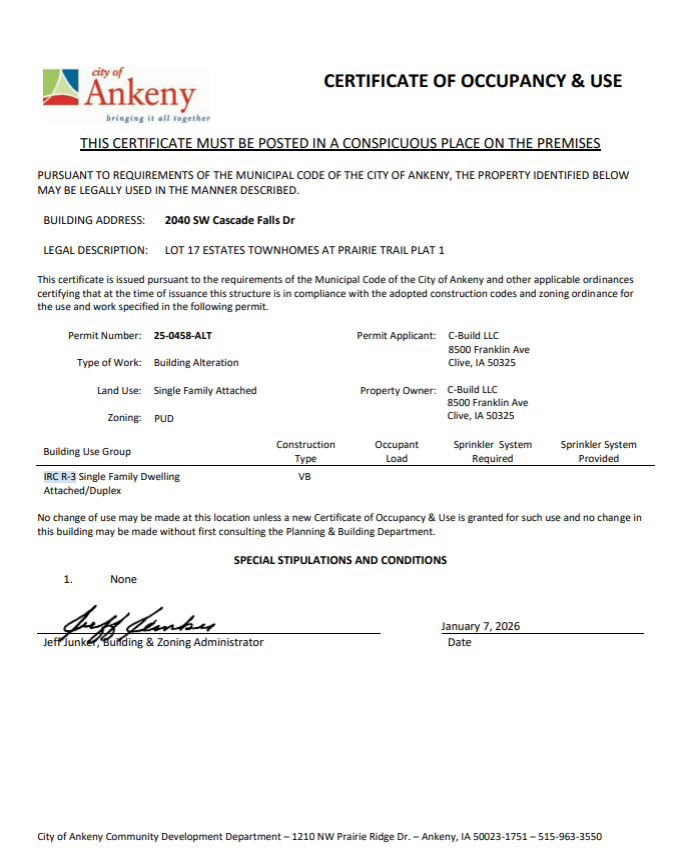
You may be worried that the buyer will still rescind their offer even after you identified, removed, and disclosed the mold growth, but this isn’t very common. Most buyers are satisfied with remediation proof, and in fact may follow your lead when you express confidence in the removal. A certificate of occupancy, for example, visibly demonstrates that the property meets all health and safety building codes:
Consider Calling SoldFast If Mold Means You Can’t Sell
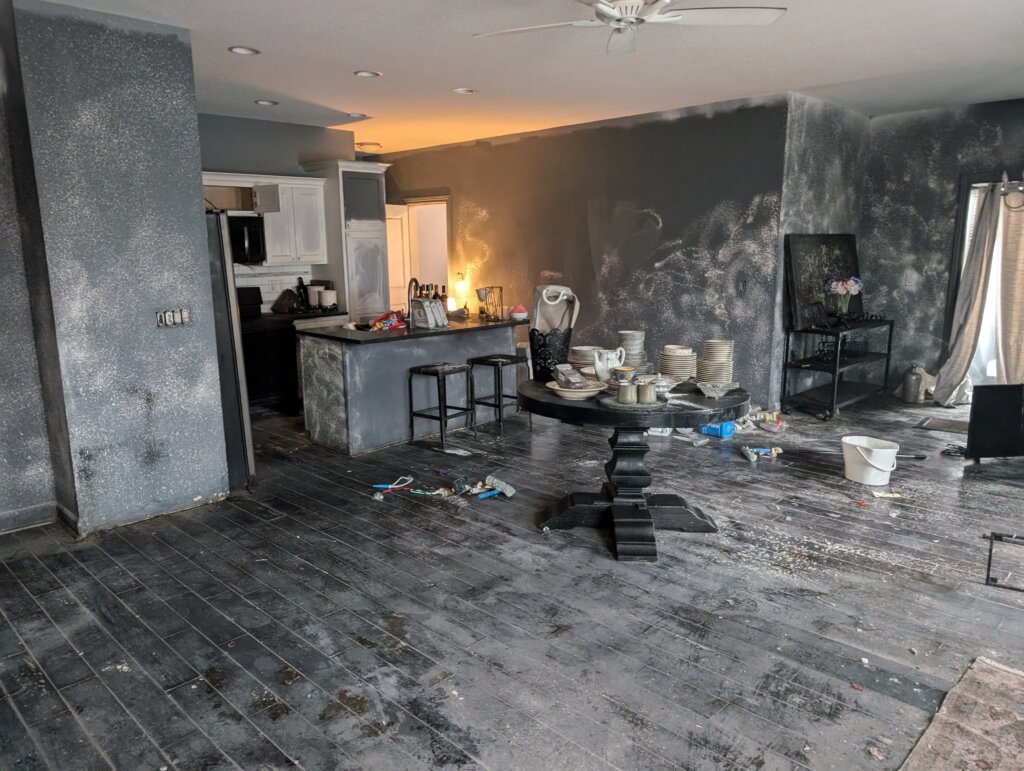

As bad as this townhome looked during our walkthrough, most of the damage was cosmetic. SoldFast works with local contractors and other specialists to restore these properties to move-in ready condition. We can sit down with you to explore your options for moving forward.
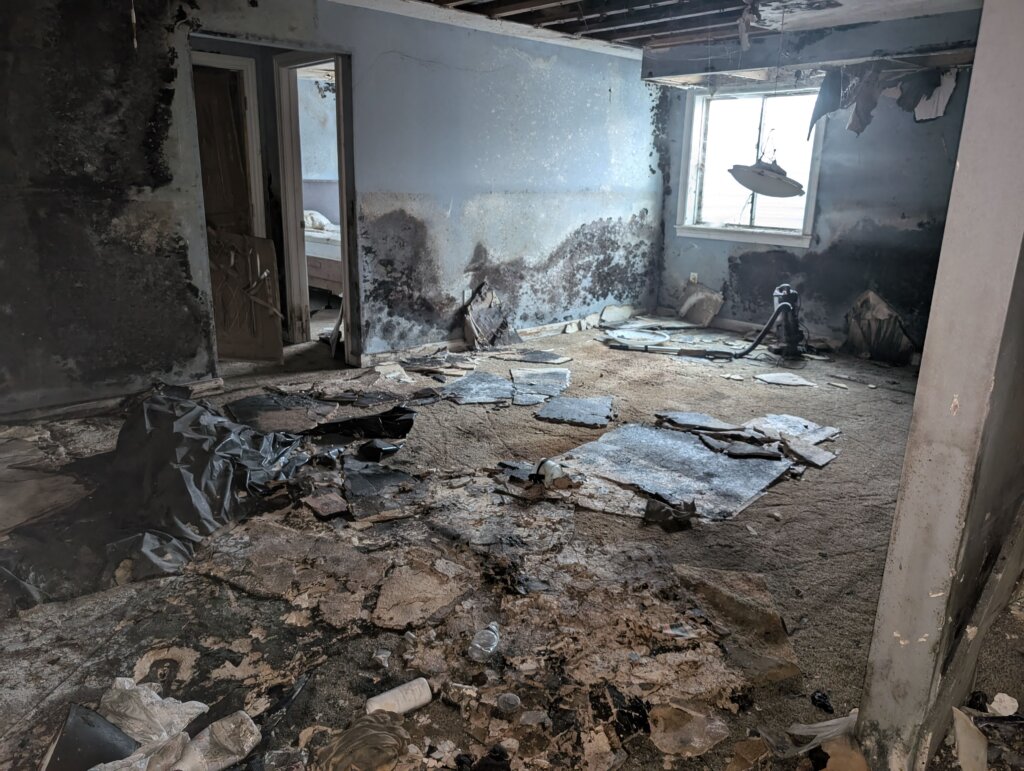
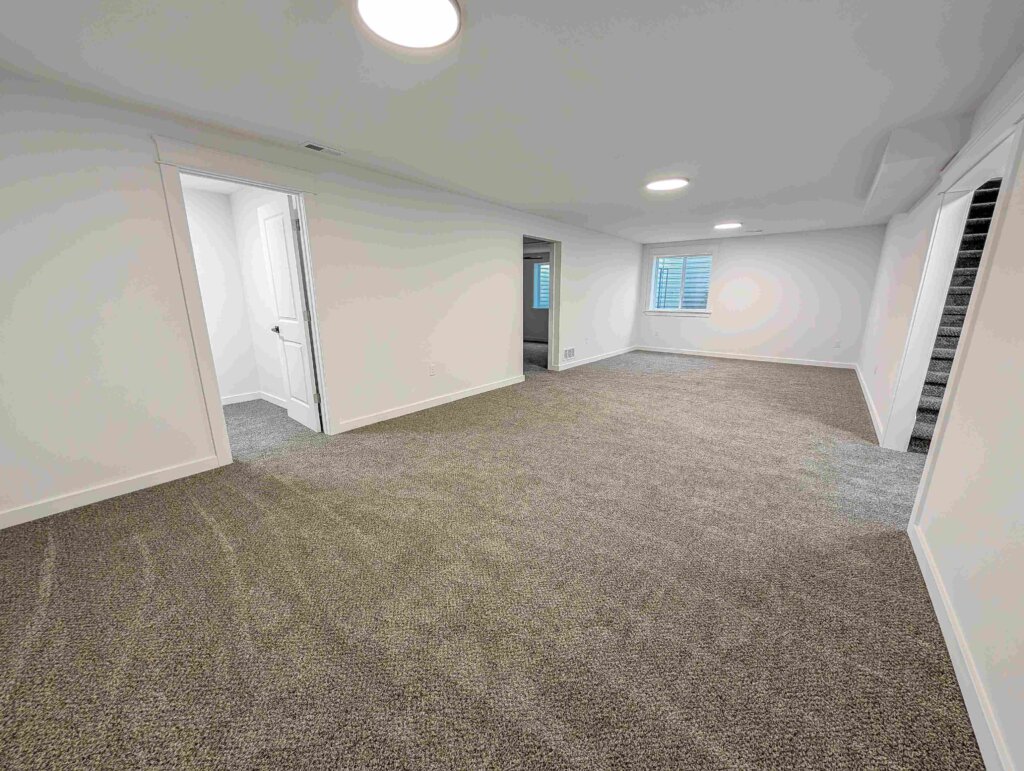
Homes with severe cases of mold infestation and structural damage will struggle to sell with traditional buyers. In the worst cases, your best option may be to find a cash home buyer with enough resources to tackle such a massive headache. It may be hard to believe, but this is exactly what they’re looking for:
With a network of experienced local realtors and community-minded investors, SoldFast can determine the true value for your home and put that offer on the table right from the start. If your mold problem is starting to spiral out of control, enter your address below and contact your local SoldFast operator today!